Cat Lai Port is the largest import-export gateway in southern Vietnam, processing thousands of containers every day. With such high cargo volume, preparing a complete customs dossier not only speeds up clearance but also minimizes risks such as requests for supplementary documents, declaration amendments, and demurrage or storage charges.
In practice, many shipments are delayed not because of a complex customs process but because the business is missing or has misdeclared documents. That is why understanding the documents required before starting customs procedures is extremely important in import-export.
In this article, we compile a complete list of the indispensable documents for customs clearance at Cat Lai Port, along with tips to help the clearance process run smoothly.
1. Electronic Customs Declaration
The customs declaration is the most important document in an import-export dossier. Today, businesses file it on the VNACCS/VCIS system using a digital signature. Once the filing is successful, the system issues a declaration number and automatically classifies the channel. The information on the declaration includes:
- The exporter.
- The importer.
- The goods description.
- The HS code.
- The customs value.
- The duty rate.
- The quantity.
- The weight.
- The port of loading and port of discharge.
Businesses should check carefully before transmitting the declaration to avoid later amendments.

2. Foreign Trade Contract (Sales Contract)
The foreign trade contract is the legal basis proving the transaction between buyer and seller. A contract typically shows:
- Details of both parties.
- The type of goods.
- The quantity.
- The contract value.
- The delivery terms (Incoterms).
- The payment terms.
- The delivery time.
Although it is not always submitted to customs, it is an important document for cross-checking whenever an inspection is requested.
3. Commercial Invoice
The commercial invoice is the document that establishes the transaction value of the shipment. Its contents usually include:
- The seller.
- The buyer.
- The goods description.
- The unit price.
- The total value.
- The delivery terms.
- The payment terms.
This is the basis on which customs determines the dutiable value of imported goods.
4. Packing List
The packing list describes in detail how the goods are packed. The information usually includes:
- The number of packages.
- The package dimensions.
- The net weight.
- The gross weight.
- The packing specifications.
- The list of goods in each package.
The packing list must be consistent with the invoice and the bill of lading to avoid requests for clarification.

5. Bill of Lading
The bill of lading (B/L) is a document issued by the shipping line or carrier. The information on it includes:
- The shipper.
- The consignee.
- The vessel name.
- The voyage number.
- The port of departure.
- The port of arrival.
- The container number.
- The seal number.
- The goods description.
This is a key document for the business to take delivery of the goods at Cat Lai Port.
6. Certificate of Origin (C/O)
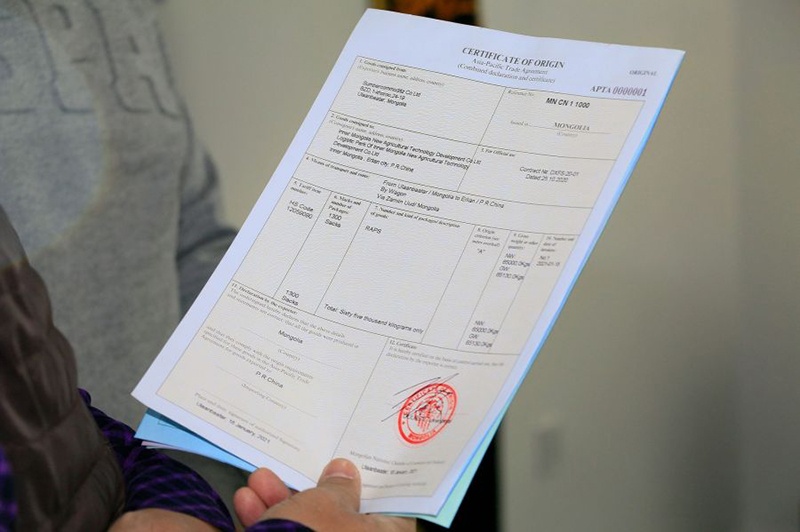
The C/O (Certificate of Origin) helps prove the origin of the goods. If the goods meet the rules of origin under free trade agreements (FTAs), the business may enjoy preferential import duties.
Some common forms include: Form D, Form E, Form AK, Form CPTPP, EUR.1, RCEP, and so on. Preparing a valid C/O can help the business save significantly on duty costs.
7. Import or Export License
Some goods subject to specialized management must have a license before customs procedures. For example:
- Chemicals.
- Medical devices.
- Cosmetics.
- Food products.
- Used machinery.
- Goods managed by ministries and sectors.
Without a valid license, the shipment will not qualify for clearance.

8. Specialized Inspection Documents
Depending on the type of goods, a business may also need to prepare:
- A plant quarantine certificate.
- An animal quarantine certificate.
- Quality inspection results.
- A food safety certificate.
- A certificate of conformity.
- A certificate of standard compliance.
These documents can be submitted electronically through the National Single Window for many procedures under current regulations.
9. Catalogue or Technical Documentation
For machinery, equipment, or goods with a complex composition, businesses should prepare:
- A catalogue.
- A datasheet.
- Product images.
- Technical documentation.
These documents help customs accurately determine the HS code and the management policy for the goods.
10. Payment Documents
In some cases, a business needs to provide:
- A telegraphic transfer (T/T).
- An L/C.
- A bank credit advice.
- International payment documents.
These documents are used to cross-check the declared value when requested by customs.
Common Documentation Errors
Some errors that delay clearance at Cat Lai Port include:
- An incorrect HS code.
- A missing commercial invoice.
- A missing packing list.
- A missing C/O.
- A missing specialized license.
- An incorrect container number.
- An incorrect seal number.
- An incorrect goods description.
- Inconsistent information across documents.
These errors can force the business to amend the declaration or supplement the dossier, prolonging clearance.
Tips for Preparing a Customs Dossier
To make the process fast, businesses should:
- Prepare all documents as soon as the foreign trade contract is signed.
- Carefully verify the information on the invoice, packing list, and bill of lading.
- Determine the correct HS code before declaring.
- Apply for specialized licenses before the goods arrive at the port.
- Keep complete records for post-clearance audits.
- Work with a customs service provider if the goods have special requirements.
Conclusion
Preparing complete documents for customs clearance at Cat Lai Port is decisive for clearance speed and import-export efficiency. An accurate, consistent, and compliant dossier saves time, limits extra costs, and improves supply chain performance.
For shipments with special requirements or businesses without much experience, partnering with a professional customs service provider is the optimal solution to ensure fast, safe clearance.
We are committed to delivering the most effective solutions that save time, cut costs, and minimize risks throughout the customs clearance process at Cat Lai Port. Contact Embassy Freight now via Hotline: 0936911656 for the fastest consultation and quote!
Need a quote for shipping & import-export procedures?
Embassy Freight provides ocean freight, air freight, customs clearance, and full-service import-export back-office solutions. Get a free quote or explore our services.