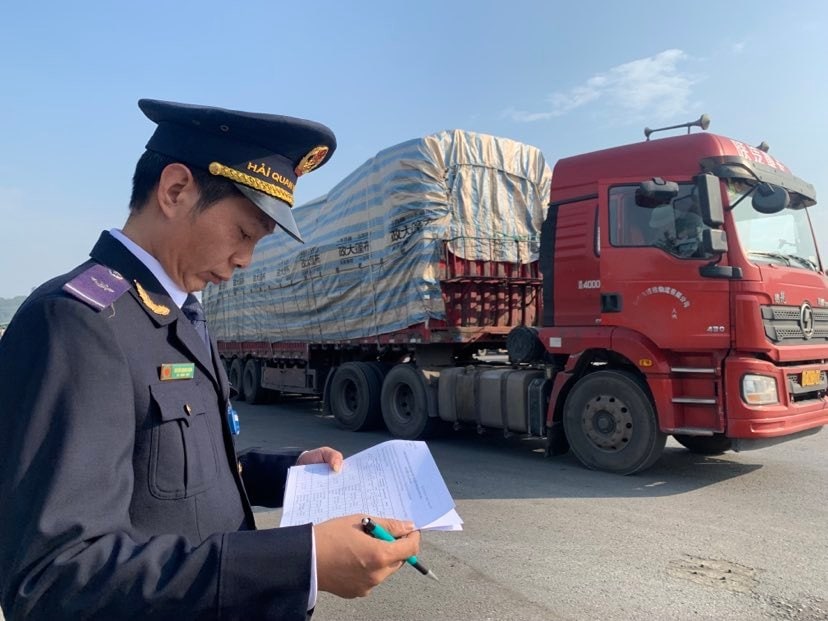
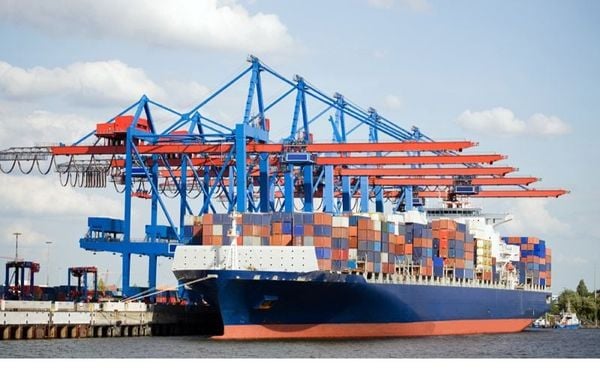
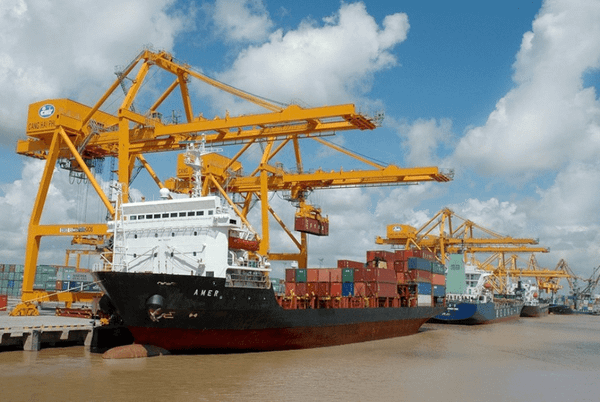
Cai Mep Port is one of Vietnam's largest deep-water port clusters and plays a vital role in the import-export of goods. Thousands of containers go through clearance here every day, serving manufacturing, trade, and logistics businesses nationwide.
For clearance to move quickly, preparing a complete dossier is mandatory. Just one missing document or inconsistent information across papers can require supplementing the dossier, amending the declaration, or prolonging clearance and incurring demurrage and storage costs.
So which documents does a business need when carrying out customs procedures at Cai Mep Port? Below is a list of the key documents that most import-export shipments require.
1. Electronic Customs Declaration
The customs declaration is the most important document in the entire dossier. Today, businesses file it on the VNACCS/VCIS system. Once the data is transmitted successfully, the system issues a declaration number and automatically classifies the channel for customs to process. The information on the declaration includes:
- The goods description.
- The HS code.
- The customs value.
- The duty rate.
- The port of loading and port of discharge.
- The exporter.
- The importer.
- The type of import-export regime.
Businesses should check carefully before transmitting the declaration to limit later amendments.
2. Commercial Invoice
The commercial invoice is the document that reflects the transaction value between seller and buyer. A complete commercial invoice usually includes:
- The seller's details.
- The buyer's details.
- The goods description.
- The quantity.
- The unit price.
- The total value.
- The delivery terms (Incoterms).
- The payment terms.
This is the basis on which customs determines the dutiable value of the shipment.
3. Packing List
The packing list helps customs and the port operator know how the goods are packed. The information usually includes:
- The number of packages.
- The net weight.
- The gross weight.
- The package dimensions.
- The packing specifications.
- The list of goods in each package.
The packing list must be consistent with the invoice and the bill of lading to avoid requests for clarification.
4. Bill of Lading
The bill of lading (B/L) is a document issued by the shipping line or carrier. Its contents include:
- The shipper.
- The consignee.
- The vessel name.
- The voyage number.
- The port of departure.
- The port of arrival.
- The container number.
- The seal number.
- The goods description.
This is a key document for the business to take delivery of the goods at the port and exchange the delivery order.

5. Foreign Trade Contract
The foreign trade contract is the basis proving the sale transaction between the parties. A contract typically shows:
- The seller's and buyer's details.
- The type of goods.
- The quantity.
- The contract value.
- The delivery terms.
- The payment terms.
- The rights and obligations of the parties.
The information in the contract must be consistent with the invoice and the other documents.
6. Certificate of Origin (C/O)
For shipments seeking preferential duties under free trade agreements (FTAs), the business needs to prepare a Certificate of Origin (C/O). Some common forms include:
- C/O Form D.
- C/O Form E.
- C/O Form AK.
- C/O CPTPP.
- C/O EUR.1.
Submitting the correct, valid C/O form can help the business significantly reduce import duties.
7. Import or Export License
Not all goods require a license. However, for some goods subject to specialized management, the business must also prepare:
- An import license.
- An export license.
- An approval document from the managing authority.
Without a license, the goods may not qualify for clearance.

8. Specialized Inspection Documents
Depending on the type of goods, a business may also need to prepare:
- A plant quarantine certificate.
- An animal quarantine certificate.
- Quality inspection results.
- A food safety dossier.
- A declaration of conformity dossier.
- A certificate of standard compliance.
Preparing these documents in advance helps avoid goods being held at the port while waiting to complete specialized procedures.
9. Catalogue or Technical Documentation
For machinery, equipment, or goods with a special composition, customs may require:
- A catalogue.
- A datasheet.
- Product images.
- Technical documentation.
These documents help determine the correct HS code and the management policy applied to the goods.
10. Payment Documents (When Needed)
In some cases, a business may be asked to provide:
- A telegraphic transfer.
- A bank credit advice.
- International payment documents.
These documents support the verification of the declared value when customs needs to cross-check.
Common Documentation Errors When Clearing Customs at Cai Mep Port
Some common errors that slow down clearance include:
- An incorrect goods description.
- An incorrect HS code.
- An incorrect declared value.
- A missing invoice or packing list.
- A missing C/O.
- A missing specialized license.
- An incorrect container or seal number.
- Inconsistent information across documents.
Businesses should check the entire dossier before transmitting the declaration to minimize these risks.
Tips for Preparing a Customs Dossier
For clearance to move quickly, businesses should:
- Prepare the dossier right after signing the foreign trade contract.
- Carefully check the HS code of each item.
- Cross-check the information across the invoice, packing list, and bill of lading.
- Apply for specialized licenses before the goods arrive at the port.
- Keep complete records for post-clearance audits.
- Work with a customs service provider if the goods are complex.

Conclusion
Preparing complete documents for customs clearance at Cai Mep Port is decisive for the clearance timeline and import-export efficiency. A complete dossier not only meets customs requirements but also minimizes risk, saves time, and optimizes costs.
Businesses should build a document-checking process before declaring, or work with a professional customs service provider to ensure every procedure is carried out quickly and in compliance.
We are committed to delivering the most effective solutions that save time, cut costs, and minimize risks throughout the customs clearance process at Cai Mep Port. Contact Embassy Freight now via Hotline: 0936911656 for the fastest consultation and quote!
Need a quote for shipping & import-export procedures?
Embassy Freight provides ocean freight, air freight, customs clearance, and full-service import-export back-office solutions. Get a free quote or explore our services.