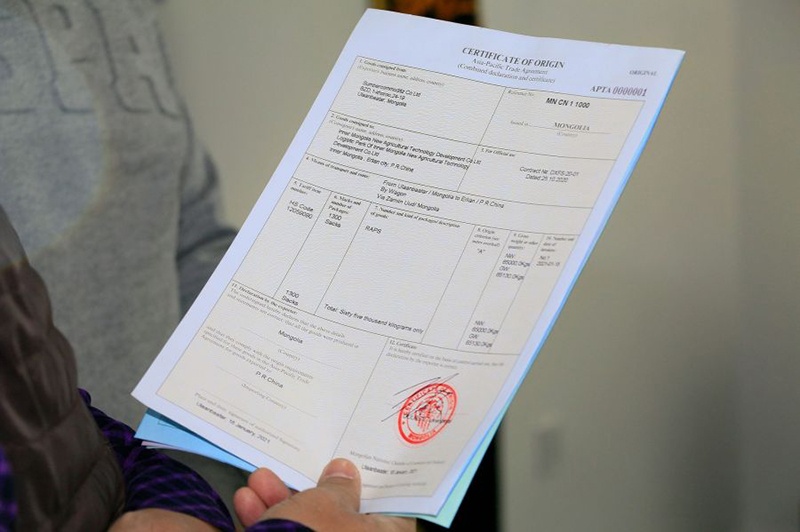
In export operations, the C/O (Certificate of Origin) is one of the key documents, especially for shipments exported to markets that require proof of origin or apply preferential tariffs under trade agreements.
A correctly prepared C/O not only proves the origin of the goods but can also help the importer meet the requirements of the destination country's customs authority and claim preferential duty rates, provided the goods fully satisfy the corresponding rules of origin.
However, obtaining a C/O requires preparing a dossier, information on materials, production processes, sales documents, and other papers proving origin. For businesses without much experience exporting a range of products, doing it themselves can take considerable time.
A C/O service for export goods is the solution that helps businesses check origin eligibility, prepare the dossier, declare information, and track the C/O issuance process in accordance with regulations.
What Is a C/O? Why Does It Matter for Exports?
C/O stands for Certificate of Origin. It is a document used to confirm that goods originate from a specific country or territory under the applicable regulations. In export operations, a C/O can be used to:
- Prove the origin of the goods.
- Meet the requirements of the customer or the destination country's customs authority.
- Serve as a basis for claiming preferential tariffs if the rules of origin are met.
- Help businesses take advantage of free trade agreements.
- Complete the export document set.
- Serve origin verification requirements in certain cases.
Not every export shipment is required to have a C/O. Whether a C/O is needed depends on the requirements of the importing country, the customer, the applicable trade agreement, and the nature of the transaction.
In particular, if the buyer wants to claim a special preferential tariff under an FTA, the goods must meet the corresponding rules of origin and use the correct type of document or form of origin certification as required.
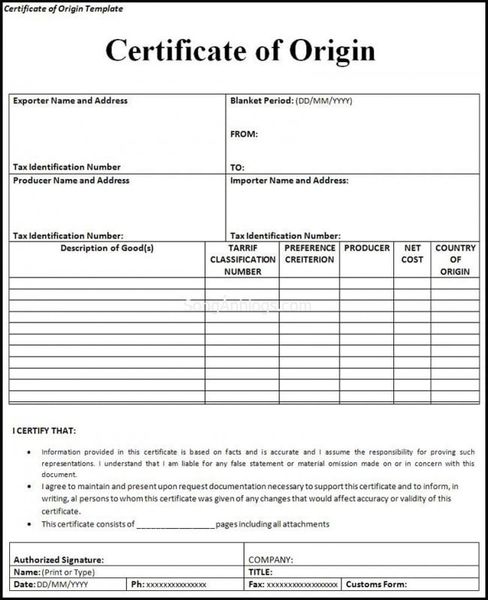
What Is a C/O Service for Export Goods?
A C/O service for export goods supports businesses in carrying out the tasks related to obtaining a Certificate of Origin for exported goods. Depending on the case, the service can include:
- Advising on the C/O type suited to the export market.
- Checking cargo information.
- Advising on rules of origin.
- Checking input materials.
- Checking material purchase documents.
- Guiding dossier preparation.
- Checking the invoice, packing list, and related documents.
- Supporting the C/O dossier declaration.
- Supporting trader information registration.
- Tracking the dossier in the system.
- Supporting supplements and adjustments to the dossier when needed.
- Following up and receiving the C/O result.
According to the Ministry of Industry and Trade's Public Service Portal, traders can register information and declare C/O application dossiers through the electronic origin management and certification system eCoSys, or follow the method prescribed for each procedure.
When Does a Business Need a C/O?
- The foreign customer requests a C/O.
- The importing country's customs authority requires proof of origin.
- The importer wants to claim preferential tariffs.
- The shipment falls within the scope of a trade agreement.
- The foreign trade contract stipulates that a C/O must be provided.
- The importing market has its own origin certification requirements.
In particular, businesses exporting to markets with an FTA should check from the moment they sign the contract whether the customer needs a preferential C/O. Identifying the required C/O type early helps businesses proactively prepare the dossier and material documents from the outset.
Common Types of C/O for Exports
C/O Form D
C/O Form D is typically tied to goods exported under ATIGA, serving trade among ASEAN countries when the corresponding rules of origin are met. The Ministry of Industry and Trade's Public Service Portal currently has a procedure for issuing preferential C/O Form D and records dossier declaration through the eCoSys system.
C/O Form E
C/O Form E is used within the framework of trade between ASEAN and China for goods that meet the applicable rules of origin. Businesses exporting to China should check the buyer's requirements and the regulations in force at the time of export to determine the appropriate origin document.
C/O Form EAV
For certain exports to markets in the Eurasian Economic Union under the applicable mechanism, businesses may encounter a requirement for C/O Form EAV.
C/O Form EUR.1
C/O Form EUR.1 is the origin certification form used within the EVFTA framework when the relevant conditions and rules of origin are met.
Non-Preferential C/O
In addition to preferential C/Os, there are non-preferential C/Os intended to prove origin or meet the requirements of a market or customer. The Ministry's Public Service Portal currently lists many non-preferential C/O procedures, such as Form B, DA59, ICO, and certain market-specific forms.
Therefore, businesses should not simply request "a C/O" but should clearly identify the export market, intended use, and type of C/O required.

C/O Dossier for Export Goods
The C/O dossier can vary depending on the C/O form, the type of goods, and the status of the business. However, businesses typically need to prepare documents related to the trader, the goods, the materials, and the production process. Some documents may include:
- Trader registration dossier.
- C/O application form.
- The corresponding C/O form.
- Commercial Invoice.
- Packing List.
- Export customs declaration.
- Foreign trade contract.
- Bill of lading or transport document.
- List of materials used.
- Material purchase invoices.
- Material import declaration, if any.
- Documents proving the origin of materials.
- Production process.
- Production norms.
- Material declaration sheet.
- Other documents proving origin depending on the case.
The C/O Process for Export Goods
Step 1: Receiving Shipment Information
The business provides information such as: product name, HS code, quantity, value, export market, importing country, importer, country of origin of materials, production process, expected export date, and more. This is the basis for determining the C/O type and rules of origin to apply.
Step 2: Determining the C/O Type
Based on the export market and the customer's requirements, the business determines the appropriate C/O type. The Ministry of Industry and Trade's Public Service Portal currently has procedures for issuing C/O Forms D, E, EUR.1, AHK, and many others.
Step 3: Checking the Rules of Origin
This is the most important step. Businesses need to determine whether the goods meet the origin criteria under the corresponding agreement or regulation. Some criteria may relate to: wholly obtained origin, HS code transformation, regional value content, processing or production operations, originating materials, specific production processes, and more.
Producing in Vietnam does not automatically qualify goods for every origin preference. Businesses must meet the exact rules of origin for the corresponding C/O type.
Step 4: Preparing the Dossier
The documents are gathered and checked to ensure consistent information. It is especially important to cross-check: product name, HS code, quantity, weight, value, manufacturer, materials, and origin of materials.
Step 5: Declaring the Dossier
The business declares on the eCoSys system or by the method applicable to the corresponding procedure. The issuing authority will check completeness and validity; if the dossier does not meet requirements, the trader may be asked to supplement or adjust it.
Step 6: Following Up and Handling Supplement Requests
If the dossier requires supplementary documents, the business needs to complete them according to the issuing authority's requirements. Checking the dossier carefully from the start helps limit reprocessing time.
Step 7: Receiving the C/O
Once the dossier is approved, the C/O is issued in the form applicable to the corresponding procedure.

Does a C/O Guarantee Preferential Tariffs?
This is one of the common reasons businesses care about C/Os. However, a C/O does not mean the goods will definitely receive preferential duty rates. To claim preferential tariffs, goods generally must:
- Meet the rules of origin of the applicable agreement.
- Have valid origin certification documents as required.
- Meet the other relevant conditions of the agreement.
- Be imported into the market applying the preference within the prescribed scope.
Therefore, businesses should check the rules of origin before producing and exporting, rather than waiting until the goods are ready to ship.
Common Mistakes When Preparing a C/O
- Incorrect Information on the C/O: A product name, quantity, weight, or business information that is inconsistent with the export documents may require the dossier to be adjusted.
- Not Checking Material Origin: The business can only prove the product was manufactured in Vietnam but lacks sufficient grounds to prove the origin of the materials.
- Incorrect HS Code: The HS code can directly relate to the HS code transformation criterion in the rules of origin. So an incorrect HS code can affect the origin assessment.
- Choosing the Wrong C/O Form: Each market and agreement may have its own document form. Choosing the wrong C/O type can prevent the importer from using the document for its intended purpose.
- Preparing the Dossier Too Late: If the business only starts preparing the C/O after the goods have shipped, missing material documents or production records can make it difficult to prove origin.
What Should Manufacturers Prepare for a C/O?
Manufacturers should build a document storage system starting from material purchasing. It is advisable to manage: material purchase invoices, warehouse receipt notes, production norms, material issue notes, material tracking sheets, product records, sales documents, and export declarations.
Managing documents thoroughly makes it easier for businesses to prove material origin when applying for a C/O and when a post-issuance check is required.
How Does a C/O Service Support Businesses?
Using a C/O service for export goods gives businesses additional support in preparing the dossier and handling procedures. The scope of support can include:
- C/O type consulting: Determining the C/O form suited to the market and the customer's needs.
- Dossier checking: Cross-checking the invoice, packing list, declaration, and related documents.
- Rules of origin consulting: Helping businesses identify the documents needed to prove origin.
- Dossier declaration: Supporting information declaration and dossier preparation as required.
- Process tracking: Updating the dossier status and helping handle supplement requests if they arise.
- Result support: Coordinating to complete the C/O issuance process under the corresponding procedure.
Why Use a Professional C/O Service?
- Save Time: Businesses can reduce the time spent researching the process and preparing the dossier.
- Limit Errors: Checking the dossier before declaration reduces the risk of inconsistent information across documents.
- Control Timing: Preparing the C/O early helps businesses stay proactive when handing over the document set to a foreign partner.
- Support for Complex Dossiers: For products using many types of materials or imported materials, proving origin can be more complex. In such cases, businesses may need expert support to review the dossier.
When Should a C/O Be Prepared?
Businesses should not wait until the eve of export to start checking the C/O. As soon as an order is received, the business should determine:
- Does the customer require a C/O?
- Which type of C/O is needed?
- Which FTA does the importing market apply?
- Do the goods meet the rules of origin?
- Do the materials have sufficient documents to prove origin?
- Are supplementary documents needed from the supplier?
For goods produced under a large order in particular, checking origin from the outset helps businesses avoid the situation where the finished product lacks sufficient documents to prove origin as required.
Reliable C/O Service for Export Goods
The C/O is an important document in export operations, especially when businesses want to meet customer requirements or take advantage of preferential tariffs from trade agreements.
However, the process of preparing a C/O for export goods must be carried out based on each market, each product, and each set of rules of origin. Businesses need to prepare complete documents related to the goods, materials, and production process to have grounds for proving origin.
If your business needs a C/O service, advice on the right C/O type, checking of the origin dossier, or support with declaration and tracking of the C/O procedure, contact Embassy Freight now via Hotline: 0936911656 for advice tailored to each specific shipment.
Need a shipping quote?
Embassy Freight provides end-to-end ocean freight, air freight, and customs clearance. Get a free quote or explore our services.